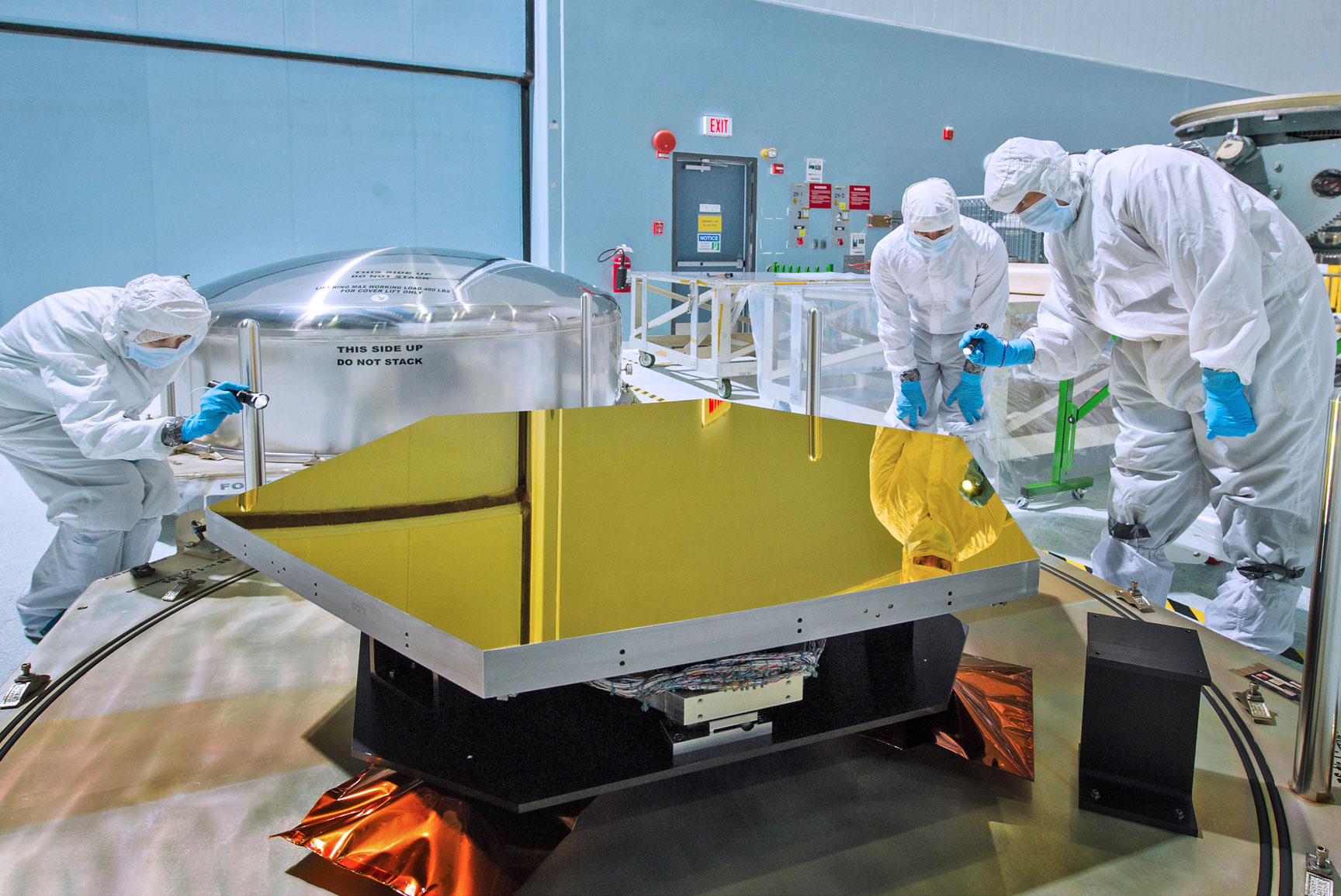
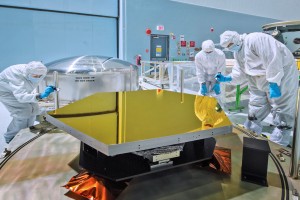
 The first thing you need if you’re building the largest, most powerful telescope in the known universe is a very large, very clean room. In the world’s largest such room, it takes 4,800 HEPA filters running nonstop to achieve “Class 10” clean – a level of clean that makes a hospital operating room look like pig sty.
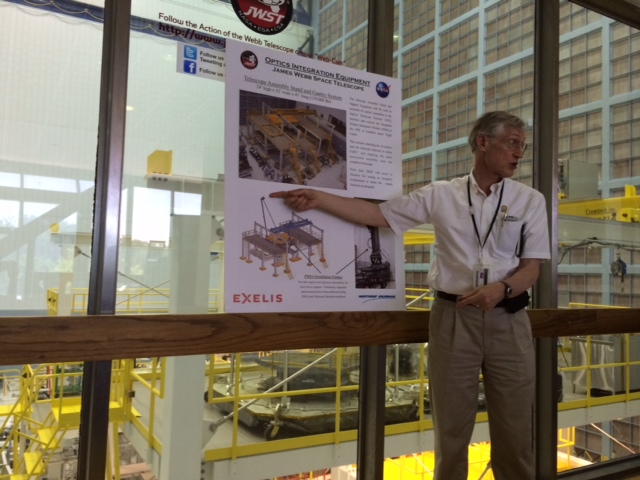
Thus began our behind-the-scenes tour of the Goddard Space Flight Center, led by a tour guide who also knows his way around the universe. Nobel Laureate John C. Mather – honored for confirming the Big Bang theory to 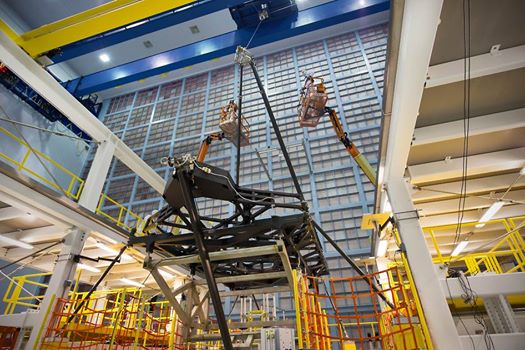 extraordinary accuracy – took time out of his busy schedule overseeing completion of the James Webb Space Telescope to show his fellow members of the American Institute of Physics development board what’s happening at NASA. (Dr. Mather takes development as seriously as he does astrophysics; he donated
a house and every penny of his Nobel prize money to student scholarships via the John and Jane Mather Foundation for Science and the Arts.)
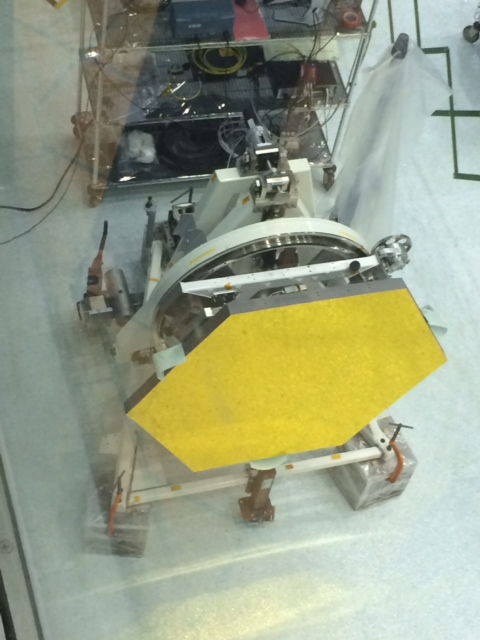
I peered through the window of the cavernous “clean room”  where a single gold hexagon awaited its place in history. I’m now monitoring the Webb’s progress on NASA’s “Webb-cam” which provides photo updates of the telescope being constructed in the clean room, in real time.
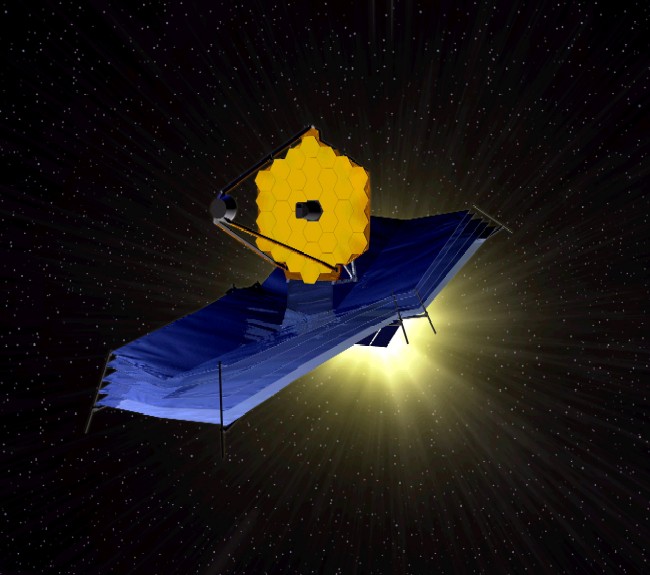
The Webb is so advanced, it will leave the Hubble in the galactic dust. A million miles away (compared to just 340 miles for the Hubble) and 100 times more powerful, the Webb will be able to examine every phase of our history, from the Big Bang to the formation of our solar system. Its gold-coated, ultra-light beryllium optics will unfold in space, forming a 6.5-meter, 18-segment mirror that can pick up a galaxy 13 billion light years away. On this video, you can see how the segments move to mimic a perfect primary mirror.
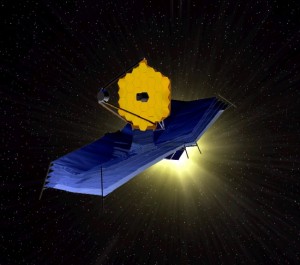 The mirror is cooled to -400 Fahrenheit by a 5-layer sunshield that folds origami style to fit inside the rocket. It will take ten days to unfold to the size of a tennis court in outer space, and two months to cool down the mirror and instruments with its astronomically high SPF. (Overprotective moms take note: SPF 1 million does exist.) Dr. Mather said “We’re on the fourth version of the sunshield.” Nevertheless, the Webb is right on schedule for its 2018 launch from French Guiana – chosen for the extra boost the rocket will receive close to the equator where the earth’s spin is a few miles per hour faster; the European Space Agency is contributing the rocket.
Everything about the Webb telescope has to be perfect 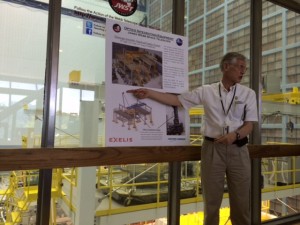 because human beings cannot visit it and tweak it in outer space the way they can the Hubble. Scientists have just one $8 billion shot at getting it right (not too much pressure, Dr. Mather), so one of the most time-consuming aspects of building this telescope is putting its components through torture tests. Dr. Mather brought us into the building where he said “we try to break stuff with sound waves.” All instruments destined for the Webb are subjected to up to 150 decibels of noise, launch vibrations, and six months inside a simulator for the cold vacuum they’ll experience in outer space. The historic chamber was built in the 1960’s, and most of our science missions have gone through it before launch.
How will the mirror and instruments withstand what the universe will put them through? Dr. Mather lauded the properties of beryllium. “Element number four behaves beautifully at low temperatures,” he said. “When a mirror segment is warm, it’s the wrong shape. When cold, it’s the right shape.” To test the mirrors, a helium-cooled refrigerator goes to -434F; its gigantic compressor resides in NASA’s basement. I wonder if they sprung for the two-year extended warranty.
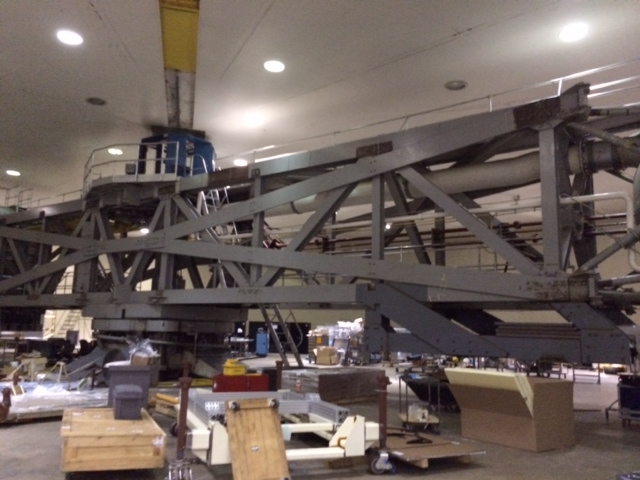 We did a 180, or rather a 360, when we walked into a vast, circular room that houses a massive centrifuge. It spins at about the rate of an old-fashioned record player, but imagine the g-forces that result when an object the size of a car twirls around on a 120-foot axis. The National Highway Traffic Safety Administration did exactly that – borrowing NASA’s centrifuge to test rollover limits of SUVs and trucks. And every time they took an SUV for a spin in the high capacity centrifuge, they used the power of a million lightbulbs.
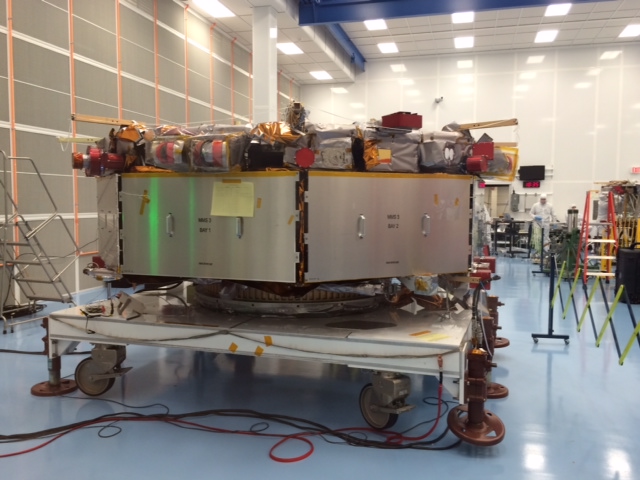
Viewing another clean room at NASA, we witnessed the assembly of four identical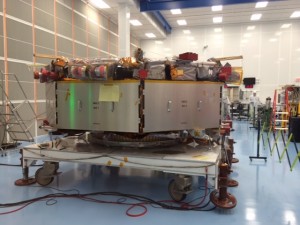 spacecraft for the Magnetospheric Multiscale (MMS) Mission. They’ll fly in a precise tetrahedron formation to gather data that will be used to greatly improve the models which predict space weather. Perhaps improving the prediction of earth’s weather will be next. Using the earth’s magnetosphere as a laboratory, the four craft will orbit the earth once a day for two years, and then will burn up on their trip back to earth.
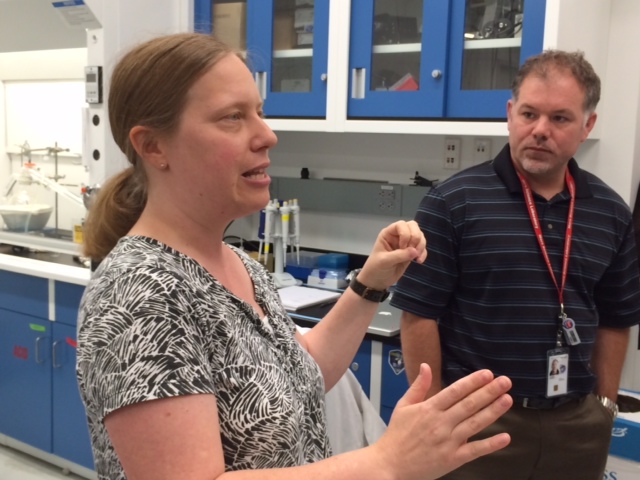
Nearing the end of our tour, we were led down a hallway into a lab that brought home what space exploration is all about. Scientists at the Astrobiology Analytical Lab handed us several 4.5-billion-year-old meteorites and described how the hunks of iron and other elements might hold clues to the origin of life. I shook a vial of cometary dust and  watched the translucent flakes floating, almost weightless, as Dr. Jamie Cook told us comets can contain amino acids, and meteorites have millions of organic components in them. Each one is like a snapshot of the chemistry of the solar system, helping to build our understanding of the ingredients of early earth and how we got from there to earliest life.
Dr. Cook explained how 40-year-old lunar samples continue to expand our knowledge of the universe: “They were collected before I was born and analyzed with instruments that didn’t exist at the time to answer questions that hadn’t even been asked.” Patience seems to be a virtue in sciences involving the prefix “astro.” She and astrobiologist Dr. Daniel Glavin are awaiting the return of samples from MSL/Curiosity – the robot now seeking signs of life on Mars. The first samples scooped from Mars’ soil, drilled from its rocks and pulled from its atmosphere will not be delivered to the lab until 2030.
We passed around a small replica of an asteroid whose actual size is half a kilometer in diameter. It’s of interest to the lab because there’s a very small chance it will hit earth in the late 2100’s. But they’ll receive enough information about it in the next ten years to know if it’s on a collision path. And there’s a team of scientists somewhere at NASA that knows what to do if it is. (If not, call FEMA.)
Amid the jumble of lab equipment and space debris, the subject of cleanliness came up again. Scientists must follow strict rules set forth by “planetary protection officers” – intergalactic cops in charge of preventing terrestrial contamination. The Viking Mars missions could not touch areas of the planet where life may potentially begin, to avoid contamination.
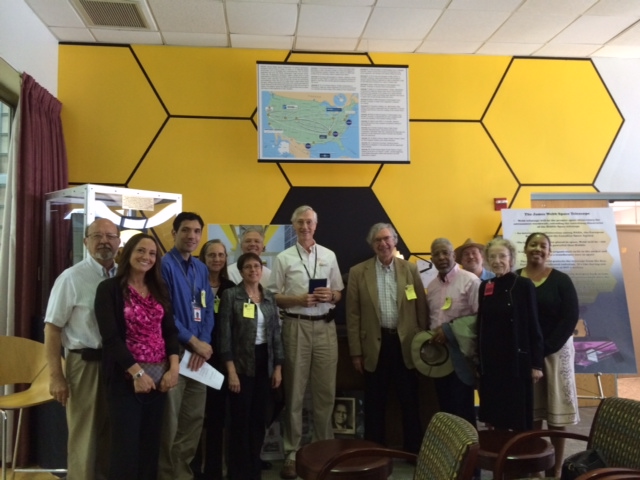 With all this talk of higher levels of clean, I asked Dr. Mather what NASA used to clean the clean room. Pledge? 409? A Swiffer? He said only organic compounds are allowed, never bleach or ammonia. The secret to Class 10 clean is ordinary alcohol. And lots of it. (There were far more probing questions from the physicists on the tour; my advertising background is to blame for my curiosity about levels of clean.)
The tour over, we all piled into the van and headed back to the American Institute of Physics’ headquarters. As we entered the high tech, ultra-modern building that houses one of the most important science libraries in the world, we were greeted with news that an enormous snake had found its way inside and somehow slithered up three floors and into an office.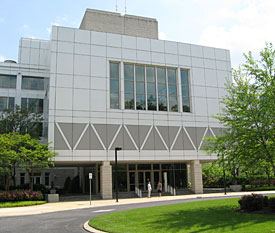
I thought about asteroids that may threaten mankind, hazards the Webb will face in outer space, and what would happen if a dog hair showed up in the clean room. As scientists battle, harness, and attempt to control the forces of nature, they bring us an ever-increasing number of answers to questions that have been asked for millennia, as well as new questions. Fortunately, science has also brought us the internet, which gives us a ringside seat to NASA’s missions and to learning what NASA and its partners in science around the world have accomplished so far. I hope you’ll enjoy exploring some of the links and videos I’ve provided. Small groups can schedule a tour of the Goddard Space Flight Center. The Visitor Center is open to all. A virtual tour is a good starting point.
Nicole Cranberg Crosby is a member of the development board of the American Institute of Physics and is also President of the Texas Fireframe Company, founded by her physicist-inventor father, Lawrence Cranberg.